In this article
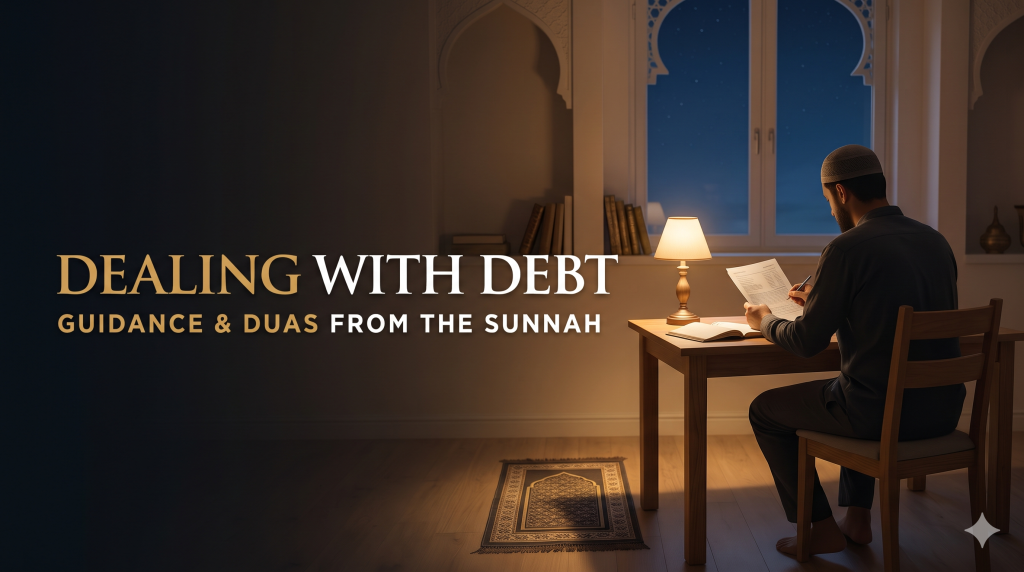
Dealing with Debt: Guidance and Duas from the Sunnah
Financial difficulties can affect anyone. A person may borrow money for essential needs, family responsibilities, education, medical expenses, or unexpected circumstances. However, debt brings responsibilities that should never be taken lightly.
What does Islam teach about borrowing money? What should a person do if they are struggling to repay a loan? Are there specific duas from the Sunnah for protection from debt?
The Qur’an and the teachings of Prophet Muhammad ﷺ provide clear guidance on these matters. Islam encourages honesty, responsible borrowing, timely repayment, compassion towards people in genuine financial difficulty, and turning to Allah through dua.
Let’s explore these teachings through authentic Islamic sources.
Daily Reminder
لَا يُكَلِّفُ اللَّهُ نَفْسًا إِلَّا وُسْعَهَا
Allah does not burden a soul beyond what it can bear.
अल्लाह किसी जान पर उसकी सामर्थ्य से बढ़कर बोझ नहीं डालता।
Meet trials with patience, prayer and trust in Allah’s wisdom.
1. Islam Teaches Us to Take Debt Seriously
Debt is not automatically forbidden in Islam. People may borrow money when there is a genuine need and the arrangement is lawful.
However, borrowing creates an obligation to repay what is owed.
The Prophet Muhammad ﷺ taught that a person who takes people’s money with a sincere intention to repay it receives Allah’s help.
Abu Hurairah (رضي الله عنه) reported that the Messenger of Allah ﷺ said:
“Whoever takes the money of the people with the intention of repaying it, Allah will repay it on his behalf; and whoever takes it in order to spoil it, then Allah will spoil him.”
Reference: Sahih al-Bukhari 2387
This Hadith teaches two important lessons:
– A person should borrow with a genuine intention to repay.
– Deliberately taking someone’s money without intending to return it is a serious wrongdoing.
If you borrow money, make a sincere effort to fulfil your promise and repay the lender.
2. The Qur’an Commands Us to Document Debts
Islam does not leave financial agreements to memory or verbal promises alone.
Allah provides detailed guidance about recording debts in Surah Al-Baqarah.
Surah Al-Baqarah (2:282)
“O you who believe! When you contract a debt for a specified term, write it down.”
This is the longest verse in the Qur’an. It explains principles for documenting financial obligations, including writing down the agreed amount and repayment term, using a fair scribe, and arranging witnesses.
The verse teaches us that financial clarity helps protect both the borrower and the lender.
Practical lessons include:
– Record the amount borrowed.
– Clearly agree on the repayment date or schedule.
– Keep proof of payments.
– Avoid misunderstandings about the terms.
– Be honest and transparent in financial dealings.
Documenting a loan is not a sign of mistrust. It is a way to protect everyone’s rights.
3. Repaying Debt Is a Serious Responsibility
The Prophet ﷺ encouraged people to repay debts properly and honour their financial commitments.
Abu Hurairah (رضي الله عنه) reported that the Messenger of Allah ﷺ said:
“The best among you are those who are best in repaying their debts.”
Reference: Sahih al-Bukhari 2393
This Hadith teaches that a borrower should fulfil the obligation in a good and honourable manner.
If you have the ability to repay your debt, do not unnecessarily delay it. Keep your promise and treat the lender fairly.
The Prophet ﷺ also warned:
“Delay in payment of debt by a wealthy person is injustice.”
Reference: Sahih al-Bukhari 2400
This warning concerns a person who is able to pay but deliberately delays repayment. It should not be used to condemn someone who genuinely lacks the means to repay.
4. What If You Cannot Repay Your Debt Because of Financial Hardship?
Islam recognises that people may face genuine financial difficulties.
The Qur’an gives clear guidance to lenders about dealing with a debtor who is in hardship.
Allah says:
Surah Al-Baqarah (2:280)
“And if someone is in hardship, then let there be postponement until a time of ease. But if you give [from your right as] charity, then it is better for you, if you only knew.”
This verse teaches mercy and compassion.
If a borrower is genuinely unable to repay, the lender should grant additional time until the borrower is financially able to pay.
Allah also praises the virtue of forgiving part or all of a debt as an act of charity.
The verse teaches us that financial dealings should not be based only on money. Compassion, patience, and consideration for others are also important Islamic values.
5. Dua for Protection from Debt and Financial Distress
One of the most important duas related to debt is a supplication that the Prophet Muhammad ﷺ used to seek Allah’s protection from overwhelming debt.
Anas ibn Malik (رضي الله عنه) reported that the Prophet ﷺ used to say:
اللَّهُمَّ إِنِّي أَعُوذُ بِكَ مِنَ الْهَمِّ وَالْحَزَنِ، وَالْعَجْزِ وَالْكَسَلِ، وَالْجُبْنِ وَالْبُخْلِ، وَضَلَعِ الدَّيْنِ، وَغَلَبَةِ الرِّجَالِ
Transliteration:
Allahumma inni a’udhu bika minal-hammi wal-hazan, wal-‘ajzi wal-kasal, wal-jubni wal-bukhl, wa dala’id-dayni wa ghalabatir-rijal.
Meaning:
“O Allah, I seek refuge in You from worry and grief, from incapacity and laziness, from cowardice and miserliness, from being heavily in debt and from being overpowered by people.”
Reference: Sahih al-Bukhari 6369
This beautiful dua asks Allah for protection from emotional distress, weakness, laziness, miserliness, overwhelming debt, and being overpowered by others.
It is a powerful supplication to learn and include in one’s regular duas.
6. A Dua for Halal Provision and Freedom from Dependence
Ali ibn Abi Talib (رضي الله عنه) narrated that a person who was unable to fulfil his freedom contract came to him for help.
Ali taught him words that the Messenger of Allah ﷺ had taught him.
The supplication is:
اللَّهُمَّ اكْفِنِي بِحَلَالِكَ عَنْ حَرَامِكَ، وَأَغْنِنِي بِفَضْلِكَ عَمَّنْ سِوَاكَ
Transliteration:
Allahummakfini bihalalika ‘an haramika, wa aghnini bifadlika ‘amman siwaka.
Meaning:
“O Allah, suffice me with what You have made lawful instead of what You have forbidden, and make me independent through Your grace of everyone besides You.”
Reference: Jami’ at-Tirmidhi 3563 — Hasan (Darussalam).
This dua teaches us to seek lawful provision, avoid prohibited sources of income, and depend upon Allah’s generosity.
It is particularly meaningful for someone facing financial difficulties and seeking a lawful way forward.
7. Practical Islamic Steps for Someone in Debt
Along with making dua, a Muslim should take responsible steps to manage financial obligations.
1. Make a sincere intention to repay
Do not borrow money with the intention of avoiding repayment. Be honest with the lender about your financial situation.
2. Know exactly how much you owe
Prepare a clear record of your outstanding debts, repayment dates, and agreed terms.
3. Make a realistic repayment plan
Review your income and essential expenses. Decide how much you can reasonably pay and follow a consistent schedule.
4. Communicate with your lender
If you cannot pay on time, explain your situation honestly. Do not disappear or avoid communication.
5. Avoid unnecessary borrowing
Before taking another loan, consider whether the expense is essential and whether you have a realistic repayment plan.
6. Seek lawful income
Work towards improving your financial position through halal earnings and honest business dealings.
7. Make regular dua and seek Allah’s help
Ask Allah for lawful provision, strength, patience, and relief from financial difficulties. Dua should accompany sincere effort and responsible action.
8. Islam Encourages Mercy Between Borrower and Lender
The teachings of Islam protect the rights of both parties.
A lender has the right to receive the money that was borrowed. A borrower has the right to fair treatment and, in genuine financial hardship, additional time.
The Qur’an encourages lenders to give respite to people who are unable to repay. The Sunnah also teaches borrowers to honour their commitments and repay debts without unnecessary delay when they are able.
A healthy financial relationship should be built upon honesty, trust, fairness, and compassion.
Conclusion: Make Dua, Act Responsibly, and Trust Allah
Debt can be a difficult test, but Islam provides guidance for both the borrower and the lender.
The Qur’an teaches us to document financial agreements and show mercy to people facing genuine hardship. The Prophet Muhammad ﷺ taught us to borrow with the intention of repayment, fulfil our obligations, and seek Allah’s protection from overwhelming debt.
Remember these two important duas:
1. For protection from overwhelming debt:
Allahumma inni a’udhu bika minal-hammi wal-hazan…
2. For halal provision and independence:
Allahummakfini bihalalika ‘an haramika, wa aghnini bifadlika ‘amman siwaka.
Learn their meanings, recite them sincerely, and combine dua with honest effort and responsible financial planning.
May Allah grant us halal and abundant provision, protect us from overwhelming debt, make repayment easy for those in difficulty, and enable us to fulfil the rights of others. Ameen.
—
Watch More Islamic Educational Videos
For more Islamic knowledge based on authentic Qur’anic verses and Sahih Hadith, explore SK Global Lens.
Next -> Why Sleep and Rest Matter in Islam: Hadith on a Balanced Life
Watch the related video: https://www.youtube.com/@skgloballens
Visit: https://skgloballens.com/
*SK Global Lens — Discover the Truth Behind Every Story.*