In this article
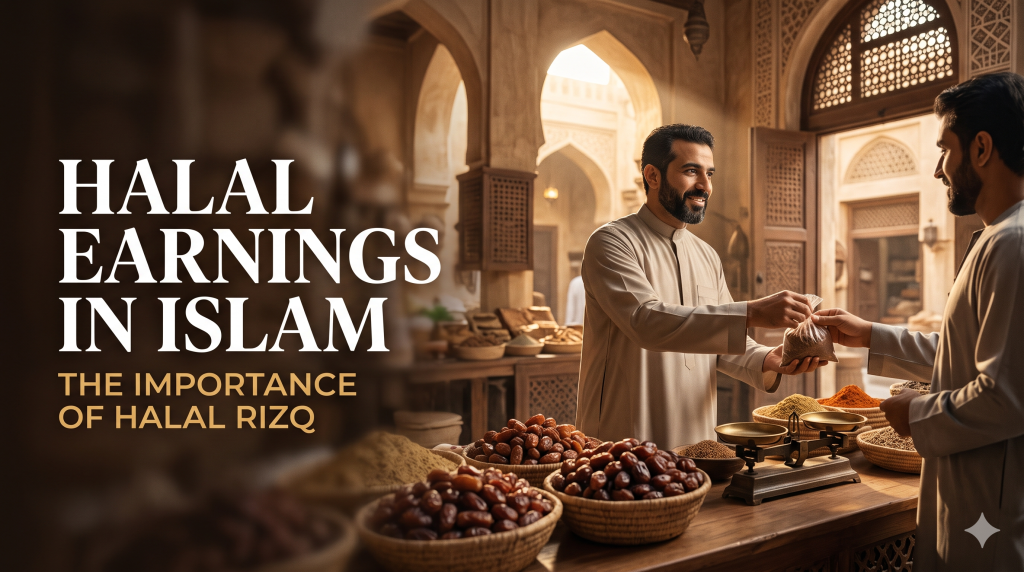
Halal Earnings in Islam: The Importance of Earning a Pure and Honest Living
In Islam, earning money is not just about making a living; it is also about following the guidance of Allah and maintaining honesty in every aspect of life.
Halal earnings (Halal Rizq) hold great importance in Islam. Every Muslim should strive to earn through lawful, honest, and ethical means while avoiding income gained through prohibited activities.
Whether someone works as an employee, runs a business, provides services, or works online, the principles of halal earnings remain essential.
Is this statement true?
Prayer may be neglected when life is busy
Deeds are judged by intentions
Charity decreases a person’s wealth
Every answer includes a Quran or Sahih Hadith reference for further learning.
What Does Halal Earnings Mean in Islam?
Halal earnings refer to money and wealth acquired through lawful means permitted by Islamic teachings.
A Muslim should ensure that their income comes from honest work, fair business practices, and activities that do not violate the principles of Islam.
Examples of halal ways to earn include:
– Working honestly for an employer.
– Running a lawful business.
– Providing professional services.
– Selling permissible products.
– Earning through skills, knowledge, and hard work.
– Conducting business with honesty and transparency.
The goal is not simply to earn more money but to earn it in a way that pleases Allah.
What Does the Quran Say About Halal Earnings?
Allah provides clear guidance regarding lawful income and financial dealings.
1. Eat from What Is Lawful and Good
Allah says in the Quran:
“O mankind, eat from whatever is on earth that is lawful and good.”
Reference: Surah Al-Baqarah (2:168)
This verse reminds Muslims to seek what is lawful and pure rather than following every opportunity to make money.
2. Do Not Take Wealth Unjustly
Allah says:
“O you who believe, do not consume one another’s wealth unjustly, but only through trade by mutual consent.”
Reference: Surah An-Nisa (4:29)
This verse establishes an important principle of Islamic financial ethics: business transactions should be based on mutual consent, fairness, and honesty.
3. Seek Allah’s Provision
Allah says:
“And when the prayer has been concluded, disperse within the land and seek from the bounty of Allah.”
Reference: Surah Al-Jumu’ah (62:10)
Islam encourages Muslims to work, conduct business, and seek lawful provision while remembering Allah.
What Does the Hadith Say About Halal Income?
The Prophet Muhammad ﷺ warned Muslims against becoming careless about where their money comes from.
In Sahih al-Bukhari, Prophet Muhammad ﷺ said:
“A time will come when one will not care how one earns money, legally (halal) or illegally (haram).”
Reference: Sahih al-Bukhari 2059
This Hadith is an important reminder that Muslims must remain conscious of the source of their income.
We should never allow the desire for wealth to become more important than following the commands of Allah.
Why Is Halal Rizq Important?
Halal earnings have a deeper meaning than financial success.
They reflect a person’s commitment to honesty, responsibility, and obedience to Allah.
Here are some important reasons to seek halal income:
1. Seeking Allah’s Pleasure: Earning through lawful means reflects obedience to Islamic teachings.
2. Honesty and Integrity: Halal income encourages fairness and trust in professional and business relationships.
3. Peace of Mind: Knowing that your earnings come from honest work brings peace and satisfaction.
4. Responsible Family Support: Providing food, education, clothing, and other necessities through lawful earnings is an important responsibility.
5. Avoiding Haram: Staying away from prohibited income protects a Muslim from knowingly engaging in unlawful financial activities.
How Can Muslims Ensure Their Income Is Halal?
Every Muslim should regularly examine their source of income and financial activities.
Some important steps include:
– Always be honest with customers, employers, and business partners.
– Never cheat, deceive, or manipulate others for financial gain.
– Avoid interest-based dealings where prohibited by Islamic law.
– Stay away from gambling and prohibited business activities.
– Do not hide defects when selling products.
– Fulfil agreements and pay workers their rightful wages.
– Consult a qualified Islamic scholar when a particular source of income is doubtful.
Remember: More Money Does Not Always Mean More Blessings
A person may earn a large amount of money but still lack peace and satisfaction.
Another person may earn a modest income through honest work and remain grateful and content.
In Islam, the value of wealth is not measured only by its quantity. The source of that wealth and the way it is used also matter.
A Muslim should always strive for both financial stability and the blessings of Allah.
Watch Our Video: The Importance of Halal Earnings
Understanding halal and haram earnings is essential for every Muslim.
Watch our video to learn more about the importance of halal income, Islamic teachings, and the responsibility of earning through honest and lawful means.
Final Thoughts
Halal earnings are an essential part of a Muslim’s life. Whether you earn through a job, business, profession, or online work, always make sure your income follows the principles of Islam.
Do not sacrifice your faith and values for temporary financial gain.
Remember, earning less through halal means is better than earning more through haram means.
May Allah bless our earnings, accept our efforts, and grant us pure and halal Rizq. Ameen.
—
SK Global Lens – Discover Islamic Knowledge, Truth, and Wisdom.
Next -> A Beginner’s Guide to Planning a Umrah Trip
Watch the related video: https://www.youtube.com/@skgloballens
Visit: https://skgloballens.com/
Follow SK Global Lens for more Islamic videos, Quranic guidance, Hadith, and informative documentaries.