In this article
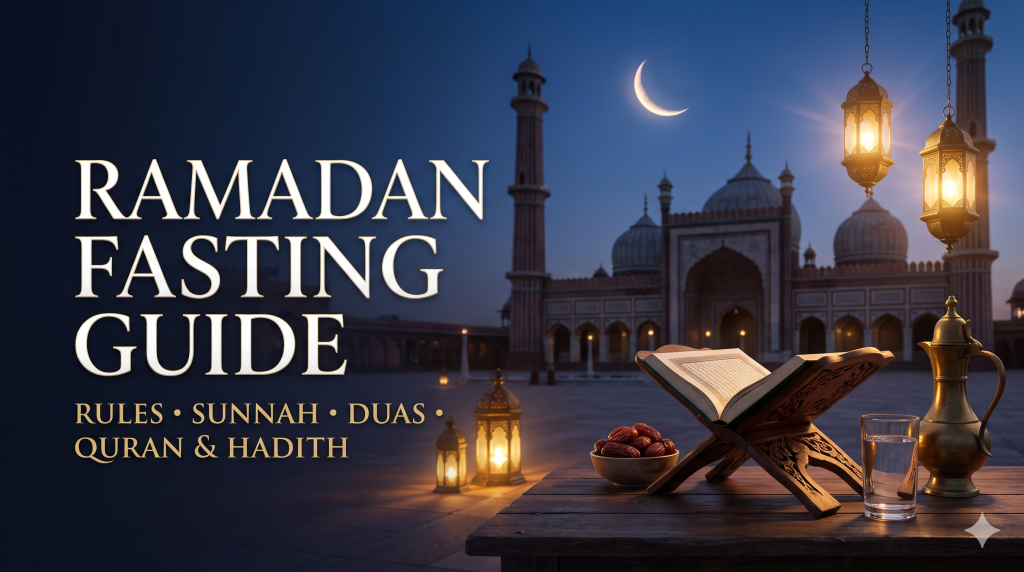
Ramadan Fasting Guide: Rules, Sunnah, Duas, and Authentic Islamic Teachings
Ramadan is one of the most blessed months in Islam. It is a time of fasting, prayer, charity, repentance, self-discipline, and strengthening our relationship with Allah.
During this sacred month, Muslims around the world observe fasting (Sawm) from dawn until sunset, abstaining from food, drink, and marital relations during the fasting hours.
However, Ramadan is not simply about staying hungry and thirsty. Its deeper purpose is to develop Taqwa (consciousness of Allah), improve our character, and increase our devotion to Him.
This comprehensive Ramadan fasting guide explains the important rules, Sunnah practices, exemptions, and Islamic teachings based on the Holy Quran and authentic Hadith.
Is this statement true?
Deeds are judged by intentions
Charity decreases a person’s wealth
Prayer may be neglected when life is busy
Every answer includes a Quran or Sahih Hadith reference for further learning.
1. Why Do Muslims Fast During Ramadan?
Fasting during Ramadan is an obligation for Muslims.
Allah says in the Holy Quran:
“O you who believe! Fasting is prescribed for you—as it was for those before you—so perhaps you will become mindful of Allah.”
Source: Surah Al-Baqarah (2:183)
This verse explains the primary purpose of fasting: developing Taqwa.
Fasting teaches Muslims:
– Patience and self-control.
– Gratitude for Allah’s blessings.
– Compassion for people experiencing hunger.
– Discipline in daily life.
– Greater devotion to Allah.
Ramadan is also the month in which the Quran was revealed as guidance for humanity.
Source: Surah Al-Baqarah (2:185).
2. When Does Ramadan Fasting Begin and End?
A daily fast begins at true dawn (Fajr) and ends at sunset (Maghrib).
Allah explains the fasting period in the Quran:
“Eat and drink until the white thread of dawn becomes distinct to you from the black thread of night. Then complete the fast until sunset.”
Source: Surah Al-Baqarah (2:187).
This means:
– Suhoor should be completed before true dawn.
– Fasting begins at the time of Fajr.
– Food and drink must be avoided during fasting hours.
– The fast ends at sunset, at Maghrib.
The beginning and end of Ramadan are determined according to the Islamic lunar calendar and the prescribed moon-sighting method followed by the relevant Muslim community.
Hadith Reference: Sahih Muslim 1080e.
3. Suhoor: The Blessed Pre-Dawn Meal
Suhoor is the meal eaten before Fajr during Ramadan.
The Prophet Muhammad ﷺ encouraged Muslims to eat Suhoor because it carries blessings.
He said:
“Take Suhoor as there is a blessing in it.”
Source: Sahih al-Bukhari 1923; Sahih Muslim 1095.
Important Sunnah practices:
– Do not unnecessarily skip Suhoor.
– Eat before the beginning of Fajr.
– Choose nutritious and balanced food.
– Avoid overeating.
– Remember Allah and prepare for the day’s fast.
Suhoor is not just a meal; it is an opportunity to follow the Sunnah of Prophet Muhammad ﷺ.
4. Iftar: Breaking the Fast at Sunset
Iftar is the meal with which Muslims end their daily fast at sunset.
The Prophet Muhammad ﷺ encouraged Muslims to break their fast promptly when sunset arrives.
He said:
“The people will remain on the right path as long as they hasten the breaking of the fast.”
Source: Sahih al-Bukhari 1957; Sahih Muslim 1098a.
According to a narration from Anas ibn Malik (RA), the Prophet ﷺ would break his fast with fresh dates before praying. If fresh dates were unavailable, he would use dried dates, and if those were unavailable, he would drink water.
Source: Jami’ at-Tirmidhi 696 (graded Hasan).
This teaches us to keep Iftar simple and follow the Sunnah.
5. Important Dua for Breaking the Fast
A commonly recited supplication at Iftar is:
Arabic:
ذهب الظمأ وابتلت العروق وثبت الأجر إن شاء الله
Transliteration:
Dhahabaz-zama’u wabtallatil-‘urooqu wa thabatal-ajru in sha Allah.
Meaning:
“The thirst has gone, the veins are moistened, and the reward is confirmed, if Allah wills.”
Source: Sunan Abi Dawud 2357.
This supplication is reported from Abdullah ibn Umar (RA).
6. What Invalidates the Fast?
The Quran identifies the main restrictions during fasting hours.
According to Surah Al-Baqarah (2:187), a fasting person must abstain from:
1. Eating intentionally.
2. Drinking intentionally.
3. Marital sexual relations during fasting hours.
Menstruation also prevents a woman from continuing the obligatory fast during those days. Missed Ramadan fasts must be made up later.
Source: Sahih Muslim 335c.
Important clarification:
If someone accidentally eats or drinks because they genuinely forget that they are fasting, they should continue their fast.
The Prophet Muhammad ﷺ said:
“If somebody eats or drinks forgetfully then he should complete his fast.”
Source: Sahih al-Bukhari 1933; Sahih Muslim 1155.
Other issues, such as medication, injections, vomiting, and medical procedures, can involve differences among Islamic scholars and schools of jurisprudence. For specific cases, consult a qualified scholar rather than relying on general internet lists.
7. Who Is Exempt from Fasting?
Islam is a religion of ease and does not intend to impose unreasonable hardship.
Allah says:
“Allah intends ease for you, not hardship.”
Source: Surah Al-Baqarah (2:185).
The Quran provides concessions for certain circumstances.
People who are ill:
Those who are ill and cannot safely fast may postpone fasting and make up the missed days when able.
Travellers:
A person travelling may postpone fasting and make up the same number of missed days later.
Pregnant and breastfeeding women:
Islamic rulings concerning fasting during pregnancy and breastfeeding depend on the circumstances and scholarly interpretation. Consult a qualified scholar about whether missed fasts require making up days, feeding the poor, or both.
Elderly people and those with permanent inability to fast:
Those who are permanently unable to fast because of advanced age or chronic illness may be subject to the ruling of Fidyah, feeding a needy person for each missed day, according to Islamic jurisprudence.
Women during menstruation or postnatal bleeding:
Women do not observe fasting during these periods and must make up the missed obligatory Ramadan fasts afterward.
Reference: Surah Al-Baqarah (2:184–185); Sahih Muslim 335c.
8. Important Sunnah Practices During Ramadan
Ramadan is an opportunity to increase good deeds and follow the Sunnah of Prophet Muhammad ﷺ.
Some important practices include:
1. Reciting the Holy Quran
Ramadan is the month of the Quran. Spend time reading, understanding, and reflecting on its teachings.
2. Performing Taraweeh Prayers
The Prophet ﷺ encouraged night prayers during Ramadan.
He said:
“Whoever prayed at night during Ramadan out of sincere faith and hoping for reward from Allah, his previous sins will be forgiven.”
Source: Sahih al-Bukhari 2009; Sahih Muslim 759.
3. Giving Charity
Help the poor, needy, and disadvantaged. Give Sadaqah and fulfil your Zakat obligations where applicable.
4. Making Dua
Ask Allah for forgiveness, guidance, protection, and blessings.
5. Seeking Laylatul Qadr
The Night of Decree is better than a thousand months.
Source: Surah Al-Qadr (97:3).
The Prophet ﷺ advised Muslims to seek Laylatul Qadr during the last ten nights of Ramadan.
Source: Sahih al-Bukhari 2020; Sahih Muslim 1169.
9. What Should a Muslim Avoid While Fasting?
Fasting is not only about avoiding food and drink. It also requires controlling our behaviour and protecting our character.
The Prophet Muhammad ﷺ said:
“Whoever does not give up false speech and evil actions, Allah is not in need of his leaving food and drink.”
Source: Sahih al-Bukhari 1903.
During Ramadan, Muslims should avoid:
– Lying and dishonesty.
– Backbiting and gossip.
– Abusive language and arguments.
– Cheating and harming others.
– Unnecessary anger.
– Wasting time in activities that distract from worship.
A successful fast should improve our character, not just change our eating schedule.
10. A Simple Daily Ramadan Routine
A balanced Ramadan routine can help Muslims make better use of this blessed month.
Before Fajr
– Wake up for Suhoor.
– Eat a balanced meal.
– Complete eating before Fajr.
– Perform Fajr prayer.
During the Day
– Continue your work and responsibilities honestly.
– Avoid arguments and negative behaviour.
– Recite the Quran.
– Remember Allah through Dhikr.
At Maghrib
– Break your fast at sunset.
– Make Dua.
– Perform Maghrib prayer.
– Eat a balanced Iftar meal.
At Night
– Perform Isha prayer.
– Attend Taraweeh or offer voluntary night prayers.
– Read the Quran.
– Sleep early enough to wake up for Suhoor.
11. The Real Purpose of Ramadan
The real purpose of Ramadan is not merely to experience hunger and thirst. It is to become a better Muslim.
A person who fasts should also strive to improve their prayers, behaviour, honesty, patience, and relationship with others.
The Prophet Muhammad ﷺ described fasting as a shield and taught that a fasting person should avoid obscene speech and quarrelling.
Source: Sahih Muslim 1151d.
Let Ramadan become a turning point in your life. Develop good habits that continue even after the month of Ramadan ends.
Watch Our Ramadan Islamic Video
Want to learn more about Ramadan, fasting, and authentic Islamic teachings?
Watch our informative video on SK Global Lens and discover the wisdom and importance of fasting in Islam.
Subscribe to SK Global Lens for more Islamic knowledge, Quranic guidance, authentic Hadith, and informative Islamic documentaries.
Conclusion
Ramadan is a precious opportunity to seek forgiveness, strengthen faith, and earn the pleasure of Allah.
Follow the Quran, practise the authentic Sunnah, fulfil your obligations, and treat others with kindness.
May Allah accept our fasting, prayers, charity, and good deeds. May He grant us the ability to witness Ramadan, benefit from its blessings, and become better Muslims.
Ameen.
—
SK Global Lens – Discover the Truth Behind Every Story.
Next -> Halal Earnings in Islam: The Importance of Earning a Pure and Honest Living
Watch the related video: https://www.youtube.com/@skgloballens
Visit: https://skgloballens.com/