In this article
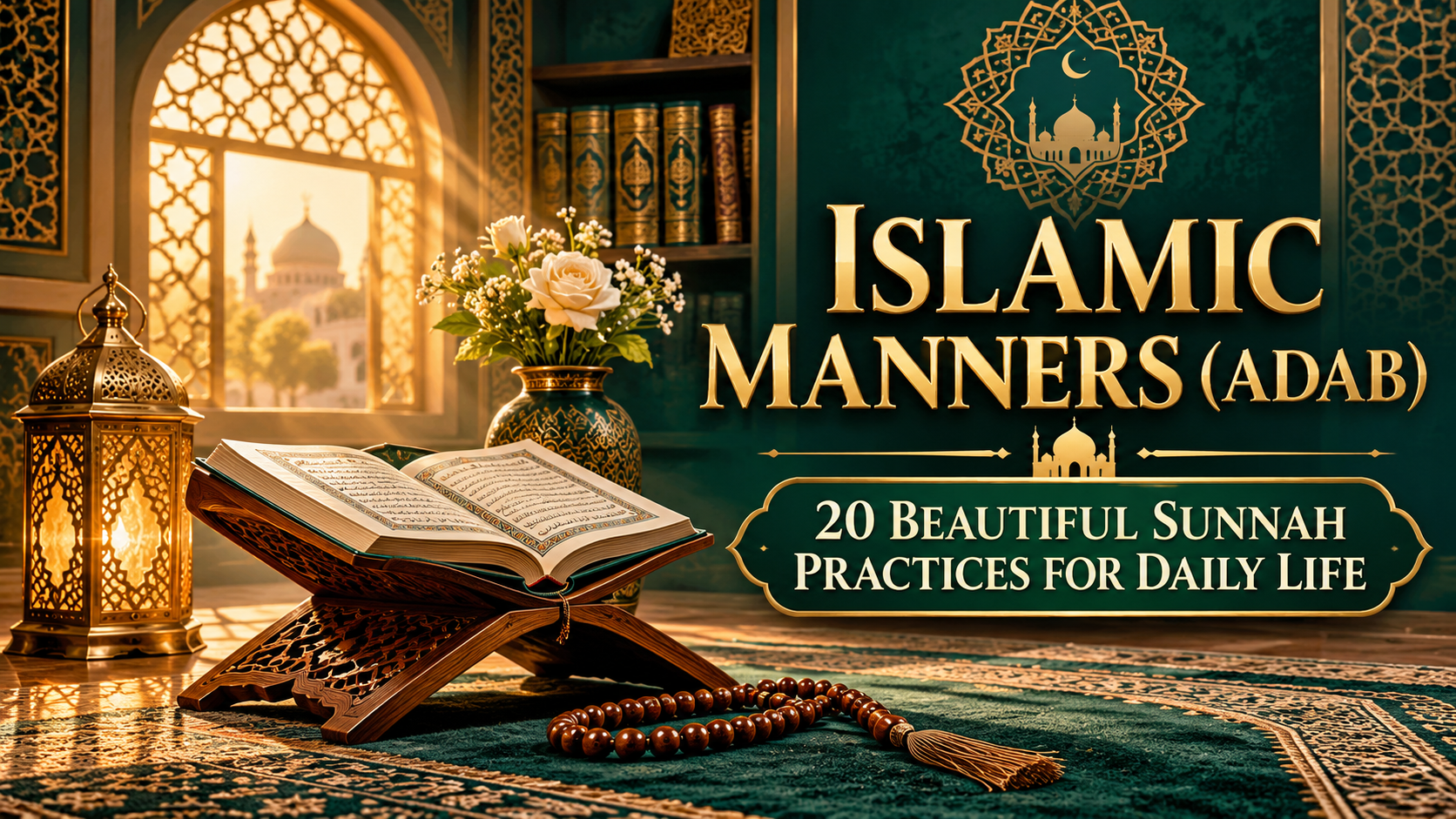
Islamic Manners (Adab) for Daily Life: 20 Beautiful Sunnah Practices Every Muslim Should Follow
Islam is not only a religion of worship; it is also a complete way of life that teaches kindness, respect, honesty, patience, and good character.
In Islam, good manners are known as Adab. They reflect a person’s faith and how they treat Allah’s creation. From greeting someone with Salaam to speaking politely, helping neighbours, respecting parents, and keeping the surroundings clean, Islamic manners guide Muslims in every aspect of daily life.
Prophet Muhammad ﷺ was the finest example of excellent character. His life demonstrated how a Muslim should behave at home, in society, while conducting business, and even when dealing with people who disagree with them.
Allah says in the Holy Quran:
“And indeed, you are of a great moral character.”
Surah Al-Qalam (68:4)
In this article, we will explore 20 important Islamic manners that every Muslim should try to practise in daily life, supported by Quranic teachings and authentic Hadith.
What Is Adab in Islam?
Adab refers to good manners, proper conduct, respect, and etiquette according to Islamic teachings.
It includes how Muslims speak, behave, interact with others, maintain cleanliness, and fulfil their responsibilities.
Islam teaches that good character is not limited to religious gatherings or special occasions. It should be reflected in everyday actions.
For example:
– Speaking truthfully.
– Respecting parents and elders.
– Greeting others with Salaam.
– Avoiding gossip and backbiting.
– Keeping promises.
– Helping people in need.
– Treating neighbours kindly.
– Showing humility and patience.
Good manners are an important part of Islamic character and should be practised consistently.
20 Islamic Manners Every Muslim Should Follow in Daily Life
1. Begin with Bismillah
A beautiful Islamic habit is to begin permissible and beneficial activities by remembering Allah and saying Bismillah (In the name of Allah).
Muslims can say Bismillah before:
– Eating and drinking.
– Starting a journey.
– Beginning work or study.
– Performing everyday tasks.
Remembering Allah helps believers develop gratitude and mindfulness.
Hadith Reference: Sahih al-Bukhari 5376 and Sahih Muslim 2022a. Prophet Muhammad ﷺ instructed a young boy to mention Allah’s name, eat with the right hand, and eat from what was nearest to him.
2. Greet Others with Salaam
Greeting fellow Muslims with Salaam is one of the beautiful practices of Islam.
The greeting is:
Assalamu Alaikum wa Rahmatullahi wa Barakatuh
Meaning: May the peace, mercy, and blessings of Allah be upon you.
Returning the greeting is also an Islamic obligation.
Allah says:
“And when you are greeted with a greeting, greet [in return] with one better than it or [at least] return it [in a like manner].”
Surah An-Nisa (4:86)
A sincere Salaam spreads peace, affection, and brotherhood among people.
3. Speak Kindly and Avoid Hurtful Words
Islam teaches Muslims to use their words carefully.
A believer should avoid insulting others, using abusive language, spreading rumours, or speaking with arrogance.
Prophet Muhammad ﷺ said:
“Whoever believes in Allah and the Last Day should speak good or remain silent.”
Reference: Sahih al-Bukhari 6018; Sahih Muslim 47.
Before speaking, consider whether your words are truthful, useful, and respectful.
4. Respect and Obey Your Parents
Respecting parents is one of the most important responsibilities in Islam.
Allah commands Muslims to worship Him alone and treat their parents with kindness.
Allah says:
“And your Lord has decreed that you not worship except Him, and to parents, good treatment.”
Surah Al-Isra (17:23)
Islam teaches Muslims to:
– Speak respectfully to parents.
– Listen to them with patience.
– Help them in their daily needs.
– Make Dua for them.
– Avoid hurting their feelings.
– Care for them, especially in old age.
Obedience to parents is not absolute; Muslims must not obey anyone in something that involves disobedience to Allah. However, even in disagreement, parents should be treated with kindness.
5. Maintain Cleanliness and Personal Hygiene
Cleanliness is an important part of Islamic life.
Muslims are encouraged to maintain cleanliness in their bodies, clothes, homes, and surroundings.
Daily practices include:
– Performing Wudu before Salah.
– Keeping clothes clean.
– Maintaining personal hygiene.
– Cleaning the home.
– Keeping public places free from litter.
– Removing harmful objects from pathways.
Prophet Muhammad ﷺ said:
“Purification is half of faith.”
Reference: Sahih Muslim 223.
Cleanliness reflects discipline and respect for oneself and others.
6. Eat and Drink with Good Manners
Islam provides guidance even for everyday activities such as eating and drinking.
Prophet Muhammad ﷺ taught Muslims to eat with the right hand and mention Allah’s name before eating.
Important eating manners include:
– Say Bismillah before eating.
– Eat with the right hand.
– Eat from the portion nearest to you when sharing a dish.
– Avoid wasting food.
– Do not criticise food unnecessarily.
– Avoid overeating.
– Express gratitude to Allah.
Hadith Reference: Sahih al-Bukhari 5376.
These simple practices encourage gratitude, discipline, and consideration for others.
7. Be Kind to Your Neighbours
Islam gives great importance to the rights of neighbours.
A Muslim should treat neighbours with respect, kindness, and consideration, regardless of their background.
Good neighbourly behaviour includes:
– Avoiding unnecessary noise.
– Helping neighbours when they need assistance.
– Sharing food when appropriate.
– Respecting their privacy.
– Avoiding arguments and harmful behaviour.
– Checking on them during difficulties.
Prophet Muhammad ﷺ said that Angel Jibreel continued advising him about the rights of neighbours until he thought that neighbours might be given a share of inheritance.
Reference: Sahih al-Bukhari 6014; Sahih Muslim 2624.
8. Be Honest in Every Situation
Honesty is a fundamental Islamic quality.
Muslims should be truthful in their personal relationships, employment, education, and business dealings.
Avoid:
– Lying to escape responsibility.
– Making false promises.
– Cheating customers.
– Providing false information.
– Hiding important facts to deceive others.
Allah says:
“O you who have believed, fear Allah and be with those who are true.”
Surah At-Tawbah (9:119)
Honesty builds trust and strengthens relationships.
9. Avoid Backbiting and Gossip
Backbiting is a serious sin in Islam.
It means mentioning something about another person that they would dislike, even if what is said is true.
Spreading rumours, exposing private matters, and damaging someone’s reputation can cause serious harm.
Allah says:
“And do not spy or backbite each other. Would one of you like to eat the flesh of his brother when dead? You would detest it.”
Surah Al-Hujurat (49:12)
Before discussing someone who is not present, consider whether your words are necessary and permissible.
10. Respect Elders and Show Kindness to Younger People
Islam teaches respect across generations.
Elders should be treated with dignity, while younger people should receive kindness, guidance, and compassion.
Prophet Muhammad ﷺ said:
“He is not one of us who does not show mercy to our young ones and respect our elders.”
Reference: Jami’ at-Tirmidhi 1919.
A respectful society begins with kindness within families and communities.
11. Keep Your Promises
Fulfilling promises is an important Islamic responsibility.
Muslims should honour their commitments, whether they involve family, friends, employment, or business.
Allah says:
“And fulfil [every] commitment. Indeed, the commitment is ever [that about which one will be] questioned.”
Surah Al-Isra (17:34)
Avoid making promises carelessly. If circumstances prevent you from fulfilling a commitment, communicate honestly and take responsibility.
12. Practise Patience During Difficulties
Patience, known as Sabr, is one of the important qualities encouraged in Islam.
A Muslim should try to remain patient during:
– Family disagreements.
– Financial difficulties.
– Personal challenges.
– Illness and hardship.
– Delays and disappointments.
Allah says:
“Indeed, Allah is with the patient.”
Surah Al-Baqarah (2:153)
Patience does not mean ignoring injustice or refusing to seek solutions. It means responding to difficulties with faith, self-control, and perseverance.
13. Avoid Arrogance and Pride
Islam teaches humility and warns against looking down on others.
A person’s wealth, education, appearance, family background, or social position should never become a reason to treat others disrespectfully.
Allah says:
“And do not turn your cheek [in contempt] toward people and do not walk through the earth exultantly. Indeed, Allah does not like everyone self-deluded and boastful.”
Surah Luqman (31:18)
A humble person treats everyone with dignity.
14. Help People in Need
Helping others is a beautiful expression of Islamic character.
Muslims are encouraged to support people who are struggling, whether through money, food, time, knowledge, or practical assistance.
Examples include:
– Feeding hungry people.
– Supporting poor families.
– Helping elderly people.
– Visiting the sick.
– Assisting someone in difficulty.
– Sharing useful knowledge.
Prophet Muhammad ﷺ said:
“Allah helps the servant as long as the servant helps his brother.”
Reference: Sahih Muslim 2699.
Even a small act of kindness can make a meaningful difference.
15. Respect the Privacy of Others
Islam teaches Muslims to respect personal boundaries and avoid unnecessary interference in other people’s lives.
This includes:
– Not entering someone’s home without permission.
– Not reading private messages without consent.
– Avoiding unnecessary questioning.
– Not spreading private information.
– Respecting family and personal matters.
Allah says:
“O you who have believed, do not enter houses other than your own houses until you ascertain welcome and greet their inhabitants.”
Surah An-Nur (24:27)
Respecting privacy helps maintain trust and dignity.
16. Be Fair and Honest in Business
Islam encourages lawful trade and fair financial dealings.
Business owners, employees, and customers should treat one another honestly.
Important business manners include:
– Giving accurate product information.
– Avoiding false advertising.
– Using correct measurements.
– Paying employees fairly.
– Keeping financial agreements.
– Avoiding fraud and deception.
Prophet Muhammad ﷺ taught that a truthful and trustworthy merchant will have a high status in the Hereafter.
Reference: Jami’ at-Tirmidhi 1209.
17. Smile and Treat People Kindly
A simple smile can make another person feel respected and welcomed.
Islam encourages Muslims to maintain a friendly attitude and avoid unnecessary harshness.
Prophet Muhammad ﷺ said:
“Your smiling in the face of your brother is charity.”
Reference: Jami’ at-Tirmidhi 1956.
Good manners do not always require money or great effort. Small gestures can also be acts of charity.
18. Control Anger and Forgive Others
Anger can damage relationships and lead to harmful words or actions.
Islam teaches believers to control their anger and forgive when appropriate.
Allah praises those:
“Who restrain anger and who pardon the people – and Allah loves the doers of good.”
Surah Aal-e-Imran (3:134)
Practical ways to manage anger include:
– Remaining silent instead of arguing.
– Avoiding abusive language.
– Walking away from unnecessary conflict.
– Seeking Allah’s protection from Shaytan.
– Making an effort to resolve disagreements peacefully.
Forgiveness is a sign of strength, not weakness.
19. Take Care of Public Places and the Environment
Islam teaches responsibility towards the environment and public spaces.
Muslims should avoid littering, damaging public property, wasting water, and creating difficulties for others.
Removing harmful objects from a pathway is considered an act of charity.
Reference: Sahih Muslim 1009.
Respecting shared spaces is an important part of good Islamic manners.
20. End Your Day with Gratitude and Self-Reflection
A Muslim should regularly reflect on their actions and seek to improve their character.
Before sleeping, consider:
– Did I hurt anyone through my words?
– Did I fulfil my responsibilities?
– Did I help someone today?
– Did I waste time or resources?
– Did I remember Allah and express gratitude?
– Is there anyone I need to apologise to?
Make Dua for forgiveness and ask Allah to improve your character.
A beautiful supplication taught by Prophet Muhammad ﷺ is:
Arabic:
اللَّهُمَّ كَمَا أَحْسَنْتَ خَلْقِي فَأَحْسِنْ خُلُقِي
Transliteration:
Allahumma kama ahsanta khalqi fa ahsin khuluqi.
Meaning:
“O Allah, just as You have made my physical form beautiful, make my character beautiful.”
Reference: Musnad Ahmad 24392; this supplication is also reported in authentic narrations.
Why Are Good Manners Important in Islam?
Good manners are not optional decorations of Islamic life. They are an important part of a Muslim’s character and responsibilities.
Here are some reasons why Adab matters:
1. Strengthens faith: Good character reflects the practical application of Islamic teachings.
2. Builds strong relationships: Respect and kindness create trust among family members and friends.
3. Promotes peace: Avoiding arguments, insults, and gossip reduces conflict.
4. Protects people’s rights: Honesty and fairness prevent injustice.
5. Improves society: Helping others and respecting neighbours create stronger communities.
6. Follows the Sunnah: Practising good manners helps Muslims follow the example of Prophet Muhammad ﷺ.
7. Brings spiritual reward: Many everyday acts of kindness are rewarded by Allah.
Prophet Muhammad ﷺ said:
“The most complete of the believers in faith are those with the best character.”
Reference: Jami’ at-Tirmidhi 1162.
A Simple Daily Islamic Manners Checklist
Muslims can gradually develop good habits by practising these simple actions every day.
– Say Bismillah before eating.
– Begin greetings with Salaam.
– Perform Salah regularly.
– Speak truthfully and politely.
– Respect parents and elders.
– Avoid gossip and backbiting.
– Keep your surroundings clean.
– Help someone in need.
– Respect neighbours.
– Keep your promises.
– Control anger.
– Thank Allah for His blessings.
– Ask forgiveness for mistakes.
Small actions, when practised consistently, can help build a stronger and more beautiful Islamic character.
Frequently Asked Questions (FAQs)
1. What does Adab mean in Islam?
Adab means good manners, etiquette, respect, and proper behaviour according to Islamic teachings. It includes how Muslims speak, act, interact with others, and fulfil their responsibilities.
2. Why are manners important in Islam?
Good manners are important because Islam teaches kindness, honesty, humility, patience, justice, and respect. They help Muslims follow the example of Prophet Muhammad ﷺ and build peaceful relationships.
3. What are five important Islamic manners?
Five important Islamic manners are:
– Greeting others with Salaam.
– Respecting parents.
– Speaking kindly.
– Maintaining cleanliness.
– Avoiding backbiting.
4. What does the Quran say about good character?
Allah praises the excellent character of Prophet Muhammad ﷺ in Surah Al-Qalam (68:4). The Quran also encourages kindness, patience, humility, honesty, and justice.
5. How can I improve my manners according to Islam?
Learn from the Quran and Sunnah, observe the character of Prophet Muhammad ﷺ, practise patience, control your speech, respect others, and regularly reflect on your actions.
6. Is smiling at someone considered charity in Islam?
Yes. Prophet Muhammad ﷺ taught that smiling at another person is an act of charity. This Hadith is recorded in Jami’ at-Tirmidhi 1956.
7. What is the best example of good manners in Islam?
Prophet Muhammad ﷺ is the finest example of Islamic manners. His life demonstrated mercy, honesty, humility, patience, forgiveness, and kindness towards others.
Conclusion
Islamic manners are an essential part of everyday Muslim life. They teach us to become better individuals, responsible family members, trustworthy neighbours, and valuable members of society.
From saying Salaam in the morning to speaking kindly, respecting parents, helping neighbours, avoiding gossip, and forgiving others, every small action can reflect the beauty of Islamic teachings.
We should remember that practising Islam is not only about performing acts of worship; it is also about developing good character and treating Allah’s creation with kindness and justice.
Let us make an effort to follow the beautiful manners of Prophet Muhammad ﷺ and bring Islamic values into our homes, workplaces, and communities.
May Allah grant us beautiful character, guide our words and actions, and make us among those who follow the Quran and Sunnah. Ameen.
Continue Learning with SK Global Lens
Explore more authentic Islamic knowledge, Quranic teachings, daily Duas, Sunnah practices, and Islamic quizzes at SK Global Lens.
Learn Islam through authentic references from the Holy Quran and Sahih Hadith.